
Last updated November 2, 2026
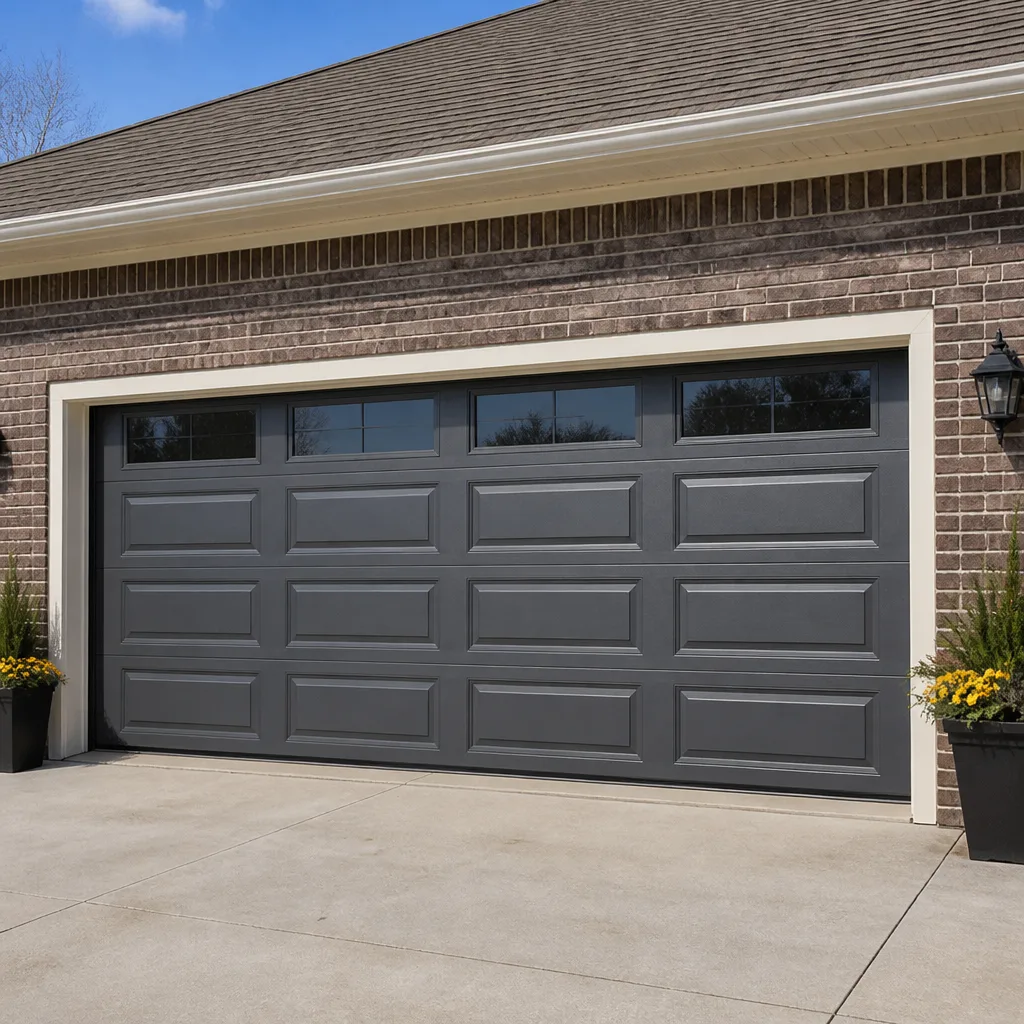 Raised-panel steel
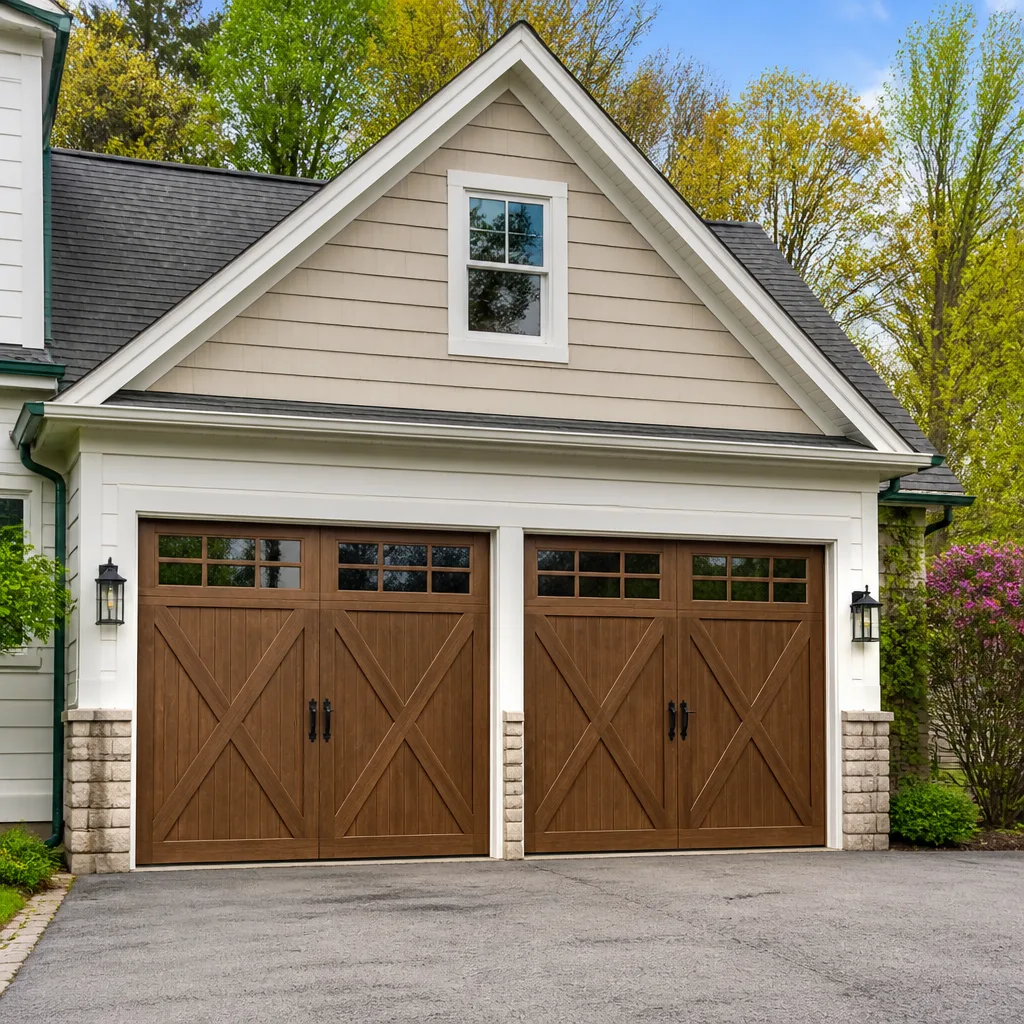 Carriage house
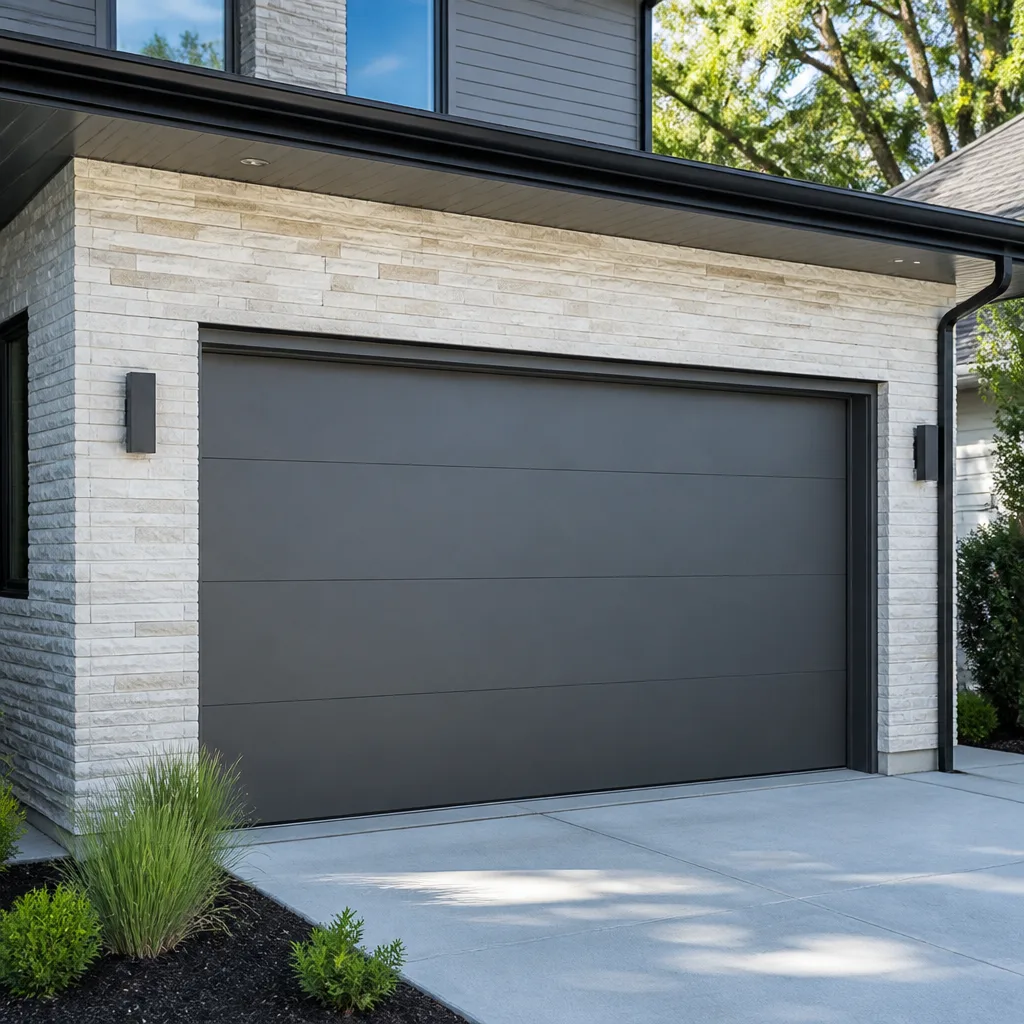 Modern flush
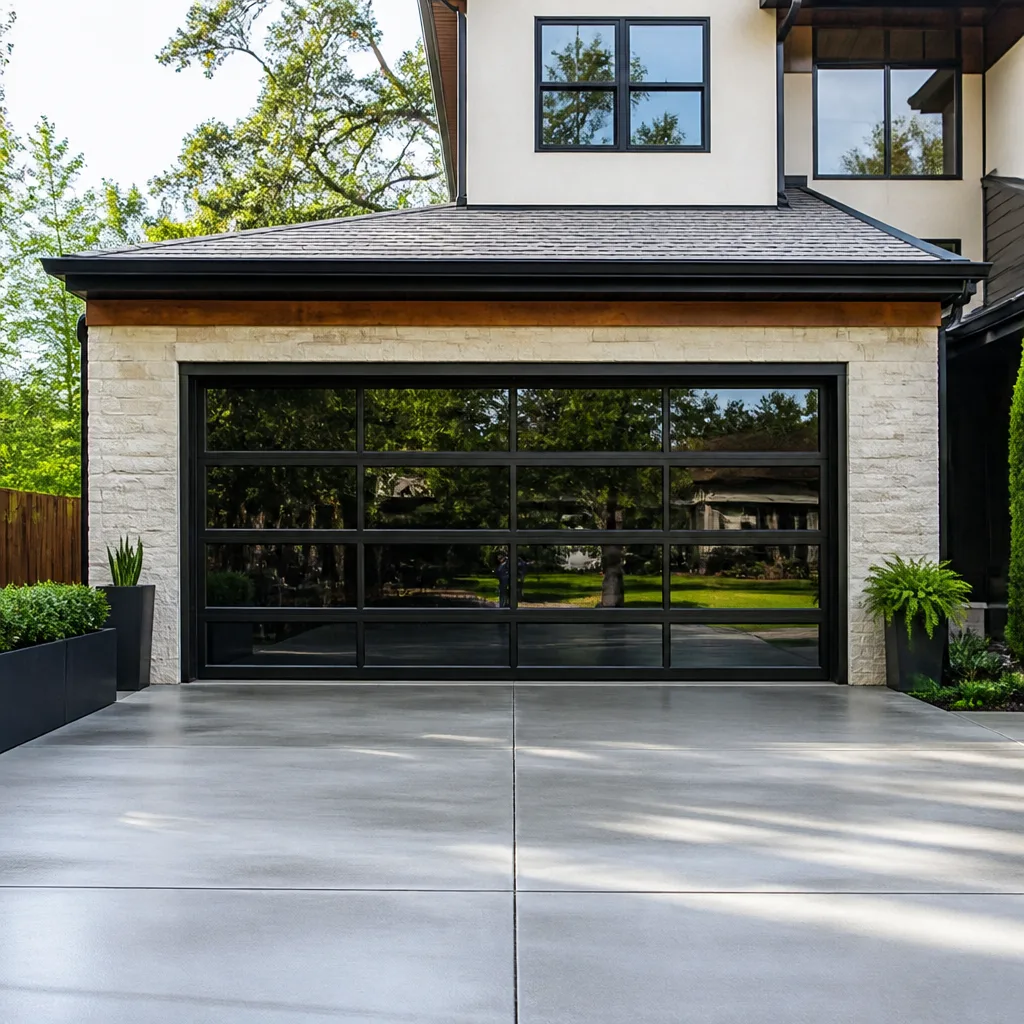 Full-view glass
 LiftMaster openers
 Chamberlain openers
Full 25-point door and opener safety check with every visit - springs, cables, rollers, tracks, and your LiftMaster or Chamberlain opener included
You get a price before we start. It does not change when the truck arrives.
Get your free estimateHow to Hire a Garage Door Contractor in Mira Mesa: A Step-by-Step Guide
California doesn’t issue a specific “garage door contractor” license. That single fact creates more confusion, more bad hires, and more expensive repair bills than any other issue in the garage door service trade. The technician who properly re-tensions a torsion spring in Mira Mesa and the general handyman who watched a YouTube video last week both operate under the same broad contractor umbrella, with nothing on a license card to tell them apart. This guide gives you the exact criteria, questions, and verification steps to separate a dedicated garage door specialist from a generalist with a spring wrench.
Quick Answer
To hire a garage door contractor in Mira Mesa, verify their CSLB license shows the C-61/D28 Door, Gate & Activating Devices classification, ask five specific questions about manufacturer training and brand familiarity, require a written quote that lists part numbers and spring specifications, and confirm a parts-and-labor warranty before any work begins. For more context, see our Complete Garage Door Repair Guide for Mira Mesa Homeowners. A dedicated garage door specialist will pass all four checks without hesitation.
Styles & brands we work with
- Raised-panel steel
- Carriage house
- Modern flush
- Full-view glass
- LiftMaster openers
- Chamberlain openers
Table of Contents
- The Licensing Gray Zone: What C-61/D28 Actually Means
- How to Verify a CSLB License in Under Two Minutes
- Five Phone-Call Questions That Separate Specialists from Generalists
- Reading a Quote: Why Part Numbers Matter More Than the Total
- Warranty Structure: Labor Only vs. Parts and Labor
- The Full Hiring Process: Step by Step
- Brand Fluency: Why It Changes the Diagnosis
- Mira Mesa-Specific Considerations
The Licensing Gray Zone: What C-61/D28 Actually Means
California’s Contractors State License Board (CSLB) doesn’t recognize garage door installation or repair as a standalone license category. Instead, garage door work falls under the C-61 limited specialty classification, specifically the D28 subcategory: Door, Gate & Activating Devices. This is the only classification that directly covers residential garage door installation, spring replacement, track work, and opener service.
Here’s why this matters for Mira Mesa homeowners: a contractor holding a General B license can legally frame your addition, run your plumbing, and pull permits for a kitchen remodel, but that B license says nothing about whether they understand torsion spring physics. A C-61/D28 holder has demonstrated, through examination and experience verification, that they know the specific mechanics of door systems. They’ve been tested on it.
The practical takeaway: when you pull up a contractor’s license, look past the presence of a license number and check the classification. A company with “garage door” in its name but only a General B classification is a generalist. A company holding C-61/D28 has gone through the narrow, specific credentialing for this exact trade.
We work on garage doors every day, and we’ll tell you plainly: the D28 classification is the single most reliable first filter you can apply. It’s not a guarantee of quality, but it eliminates the handyman who fixes dishwashers, hangs drywall, and “also does garage doors” without any verified specialization. In Mira Mesa, where hundreds of homes were built between the 1970s and 2000s and now face aging door systems, that distinction matters more than most neighborhoods realize.
Related: Garage Door Repair in Mira Mesa covers the full scope of mechanical repair work a C-61/D28 specialist handles.
How to Verify a CSLB License in Under Two Minutes
Verifying a contractor’s license in California takes less time than brewing coffee. The CSLB maintains a free, searchable database at cslb.ca.gov, and every homeowner in Mira Mesa should use it before scheduling a diagnostic call.
- Go to cslb.ca.gov and click “Check a License.” Enter the contractor’s name, business name, or license number if you have it.
- Confirm the license status reads “Active.” Anything else – expired, suspended, revoked – is a hard stop. Do not hire.
- Check the classification. Look for C-61/D28 in the classification field. If you see only General B or another unrelated classification, ask why they’re doing garage door work under that license.
- Open the “Complaint History” tab. This is where the real signal lives. A clean complaint history is good. One or two resolved complaints over a decade is normal and worth reading. A pattern of unresolved or repeated complaints about similar issues is a red flag you shouldn’t ignore.
- Verify the bond and insurance status. The license page shows current bonding and workers’ compensation insurance. If workers’ comp shows “exempt,” the contractor has no employees, which limits their capacity but isn’t disqualifying for a solo operator.
The complaint history tab is the part most homeowners skip, and it’s the part that reveals the most. A contractor can maintain an Active license while racking up consumer complaints that never escalate to formal disciplinary action. Read them. A pattern of disputes about pricing after work was completed should concern you more than a single complaint about a scheduling delay from six years ago.
Five Phone-Call Questions That Separate Specialists from Generalists
Before you invite anyone to your Mira Mesa home, make one phone call and ask these five questions. A dedicated garage door specialist answers them fluently. A generalist hesitates, hedges, or gives you generic reassurance instead of specifics.
Question 1: “Are you certified by any garage door manufacturers?”
Manufacturer certification programs like LiftMaster ProVantage and authorized Clopay dealer status aren’t marketing fluff. They mean the technician has completed training specific to those manufacturer’s product lines, has access to genuine factory parts, and is accountable to the manufacturer for warranty work. A handyman can’t get these credentials. A dedicated shop invests in them. If the answer is “we work on all brands” without any named certification program, keep looking.
Question 2: “What’s the cycle rating on the springs you install?”
Torsion springs are sold by cycle rating – 10,000 cycles for budget wire, 25,000 to 50,000 cycles for premium high-cycle springs. A technician who can’t answer this question in one sentence doesn’t understand the core component of the door they’re about to service. They should also ask how often you use your garage door when they quote you, because that determines the right cycle rating for your home. A specialist asks. A generalist quotes the cheapest spring on the truck.
Question 3: “Will the quote list the specific part numbers and spring dimensions?”
The answer must be yes. No caveats. A written quote that says “spring replacement – $450” with no specifications for wire diameter, inside diameter, length, and wind direction is a quote you can’t hold anyone to. We’ll break down exactly why in the next section.
Question 4: “Do you do both door repair and opener repair, or just one?”
Many independent operators only do mechanical door work – springs, cables, tracks, panels – and refer out anything involving a circuit board or a Wi-Fi-connected motor. Other shops are opener-only and won’t touch a torsion spring. Neither is inherently bad, but you want to know before you’re standing in your driveway with a door that’s half-broken and being told to call someone else. A full-capability specialist handles both mechanical and electronic systems. The door and the opener are one integrated system; diagnosing them as such saves you time and a second service call.
Question 5: “What’s your warranty on a torsion spring replacement?”
Listen for the words “parts and labor.” If the answer is “one year on the spring” with no mention of labor, ask directly: “If that spring fails in six months, do I pay for the second install?” You may be shocked how often the answer is yes. A parts-only warranty on a spring means you’re paying labor again on the replacement. We’ll cover warranty structure in detail below.
One call covers the door, the opener, and the installation – that’s the place to start. Garage Door Repair Mira Mesa home has the full service scope.
Reading a Quote: Why Part Numbers Matter More Than the Total
The most useful quote you’ll ever receive from a garage door contractor is also the most specific one. When we diagnose a broken torsion spring in Mira Mesa, the quote we write lists the spring by its physical specifications: wire diameter (typically .207 to .262 inch for residential doors), inside diameter (1-3/4 inch or 2 inch on most modern systems), length (anywhere from 18 to 36 inches depending on door weight and height), and wind direction (left-wound or right-wound, which is non-negotiable).
Why does this level of detail matter to you, the homeowner? Three reasons.
First, it’s your only meaningful comparison tool. If Company A quotes $385 for “spring replacement” and Company B quotes $410 for a .250 x 2 x 27 left-wound high-cycle spring with a 25,000-cycle rating, Company B’s quote is actually cheaper in real terms. The .250 wire and 25,000-cycle rating means that spring should last through roughly 10 years of daily two-car use. Company A may be installing a 10,000-cycle budget spring that fails in four years. The $25 difference is meaningless. The cycle rating is everything.
Second, part numbers create accountability. A quote that specifies manufacturer, model, and specifications is a contract. If the installed spring doesn’t match the quote, you have grounds for a CSLB complaint and a clear path to resolution. A vague quote gives you nothing.
Third, it tells you whether the technician actually diagnosed your door. A door’s spring requirement isn’t a guess. It’s calculated from door weight, door height, track radius, and cable drum size. A technician who skips the calculation and installs whatever’s on the truck is doing guesswork on a component under hundreds of pounds of tension. The specific quote proves the math was done.
We regularly see doors in Mira Mesa that were installed with mismatched springs by a previous provider – one side a .225 wire, the other a .243. The door opens uneven, the opener struggles, and the shorter-life spring fails first, taking cables with it. Specific quotes prevent that scenario. We work on the brand you already have, and we quote it so you can verify it.
Warranty Structure: Labor Only vs. Parts and Labor
The distinction between a parts warranty and a parts-and-labor warranty is the single most misunderstood aspect of garage door service contracts. It matters most on torsion spring replacements because springs are sold with cycle-rated lifespans, and when they fail within the warranty window, you need to know exactly what you’re covered for.
A labor-only warranty covers the component. If the spring breaks at cycle 8,000 of a 25,000-cycle rating, the manufacturer replaces the spring. But someone has to install that replacement. Under a labor-only warranty, you’re paying for that install again – typically $150 to $250 in Mira Mesa market conditions. Your “free” replacement spring costs you real money.
A parts-and-labor warranty covers both. The spring is replaced and installed at no cost to you within the warranty period. This is what you want on any component that requires professional installation.
The distinction extends beyond springs. A Clopay door panel replaced under warranty still requires a technician to remove the old panel, align the new one, and verify the door balance. An Amarr track assembly replacement under warranty involves removing and remounting hardware. If your warranty is parts-only, every warranty claim is a mini invoice.
Ask the direct question before signing: “Does this warranty cover parts only, or parts and labor?” Get the answer in writing on the quote. A specialist who stands behind their work has no hesitation answering. A generalist starts talking about “industry standard.”
The Full Hiring Process: Step by Step
Here’s the complete hiring sequence, from first symptom to finished repair, with every verification step in order. Follow it in sequence and you’ll eliminate 90% of bad-hire risk before a technician ever steps foot in your Mira Mesa garage.
- Document the symptom. Note the exact behavior: door won’t open, opens halfway, makes a grinding noise, opener runs but door doesn’t move, cable has visible fraying. Photograph anything visibly broken. You’ll use this during the phone screen.
- Pull the CSLB license. Search cslb.ca.gov before you call anyone. Verify Active status, C-61/D28 classification, and read the complaint history. This takes two minutes. Do it first.
- Make the phone-screen call. Ask the five questions from the section above. If any answer is vague, evasive, or “we can discuss that when we’re there,” move on. A specialist answers these questions every week.
- Schedule the diagnostic. Request a specific service window, not an all-day range. Confirm there’s no charge for the estimate, or know the diagnostic fee upfront if there is one.
- Get the written quote before work starts. The quote should list part numbers or full specifications for every component being replaced. No exceptions.
- Confirm warranty terms in writing. Parts and labor, duration, and any conditions. Write it on the quote if it isn’t already there.
- Agree on final price before the work begins. The price quoted is the price you pay. Any change requires a new written approval from you. If a contractor discovers additional damage during the repair, they should stop, show you, and get approval before proceeding.
- Test everything before the technician leaves. Run the door through a full open-close cycle. Check the opener. Visually confirm the installed components match the quote.
This process sounds rigorous. That’s the point. It’s the difference between Garage Door Opener Repair in Mira Mesa done right the first time and a three-visit saga that ends with you paying twice.
Brand Fluency: Why It Changes the Diagnosis
Garage door systems are not interchangeable. A Chamberlain belt-drive opener diagnosed by a technician who’s never opened one will produce a guess. A Genie screw-drive system with a specific circuit-board revision requires brand-specific knowledge to troubleshoot accurately. And the door hardware itself – Clopay’s steel lines, Amarr’s composite constructions – has brand-specific dimensions, hinge spacings, and panel profiles that affect fit and alignment.
This is where factory-familiarity separates a garage door specialist from a generalist. When we arrive at a Mira Mesa home with a Chamberlain opener that won’t respond to its wall console, we know the diagnostic path because we’ve worked on that exact model line through multiple revisions. When a Clopay door needs a panel replacement, we match the panel profile and hardware to the existing installation rather than forcing an approximation. When an Amarr door has a balance issue, we know its weight characteristics and spring requirements.
The practical difference for you: faster diagnosis, correct parts on the first visit, and a repair that fits the way your specific system was built. A generalist with a van full of universal parts will eventually make something work. A specialist makes it work the way the manufacturer intended.
For full door replacements, brand fluency matters even more. Garage Door Installation in Mira Mesa means matching the new door to your existing tracks, opener, and opening dimensions – and knowing which brands offer which materials, insulation ratings, and panel styles.
Mira Mesa-Specific Considerations
Mira Mesa’s climate and housing stock create specific failure patterns and service considerations that affect how you hire and what you should expect. Our Seasonal Garage Door Care for Mira Mesa: Year-Round Homeowner’s Guide covers how to stay ahead of them.
Coastal proximity and corrosion. Mira Mesa sits roughly 10 miles from the coast, close enough for marine air to accelerate corrosion on hardware but far enough inland to avoid the worst salt spray. We see more corroded bottom brackets, rusted hinge pins, and seized rollers here than in inland communities. A technician quoting a repair should specify corrosion-resistant hardware where applicable. It’s a small cost difference with a measurable lifespan difference.
Housing age and original components. Much of Mira Mesa’s single-family housing stock was built between 1970 and 2005. That means many homes are on their second or third opener and potentially their second door. Original components from the 1980s and 1990s are beyond their designed service life. If your door still has original torsion springs from a 1990s install, they’re overdue for replacement regardless of whether they’ve broken yet. A good contractor will tell you this during a routine service call, not just when something fails.
Two-car garages are the norm. The standard Mira Mesa two-car garage door – typically 16 x 7 feet – is heavier than the single-car doors common in older neighborhoods. That weight matters for spring selection, opener sizing, and track durability. Quotes should reflect components rated for a two-car door’s weight. A quote that looks identical to one your friend in Clairemont got for a single door should make you wonder if the technician did the math.
Summer heat and opener electronics. Mira Mesa’s hot inland summers push garage temperatures above 100 degrees. We see heat-related logic board failures in openers every season, particularly in older Chamberlain and Genie units. When an opener fails in July, heat-related board failure is the leading diagnosis. A technician who doesn’t understand this will sell you a motor replacement when the actual fix is a board swap or a thermal-cutout reset.
Common Mistakes to Avoid
- Hiring on price alone. The cheapest quote in Mira Mesa is frequently the most expensive outcome. Budget springs with 10,000-cycle ratings cost less upfront and get replaced twice as often. Compare specifications, not totals.
- Skipping the CSLB complaint history check. License status means compliance. Complaint history means behavior. You need to read both, and most homeowners never open the complaint tab.
- Accepting a verbal quote. If it isn’t written and specific, it isn’t a quote. A verbal number has no accountability and no part specifications. Insist on written documentation before work begins.
- Assuming “licensed and insured” means garage door specific. A General B contractor is licensed and insured, and may have never touched a torsion spring. Check the classification, not just the license number.
- Replacing the opener when the problem is the door, or vice versa. A door that’s out of balance destroys opener gears, and a failing opener can damage door panels. A specialist diagnoses the system. A generalist fixes the symptom they recognize.
- Skipping the cycle-rating conversation. If you use your garage door four times a day, a 10,000-cycle spring lasts about seven years. If you use it eight times a day, the same spring lasts fewer than four. The right spring for your usage pattern isn’t optional.
- Paying the full invoice before testing the work. Run the door through a complete open-close cycle before you sign off. Check the balance, listen for unusual noise, and verify the installed parts match the quote.
See the difference
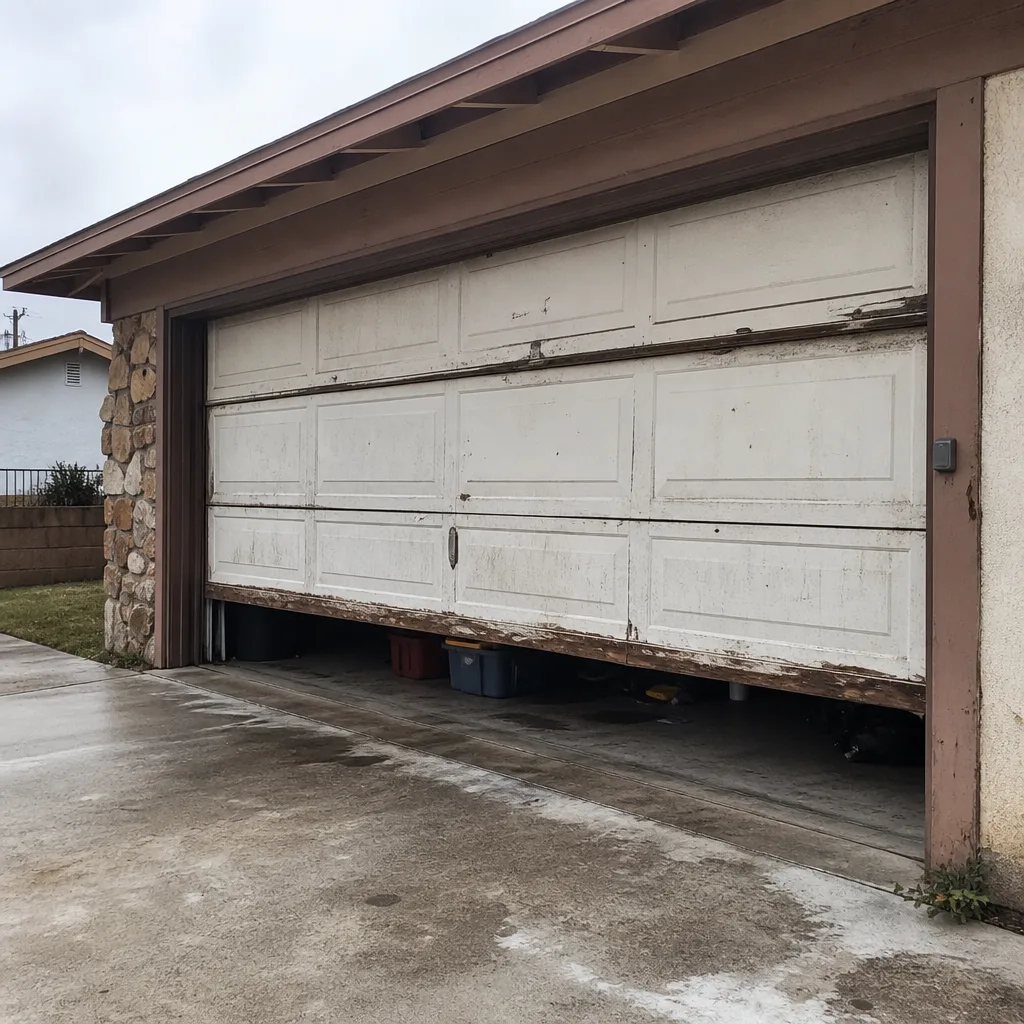 Before
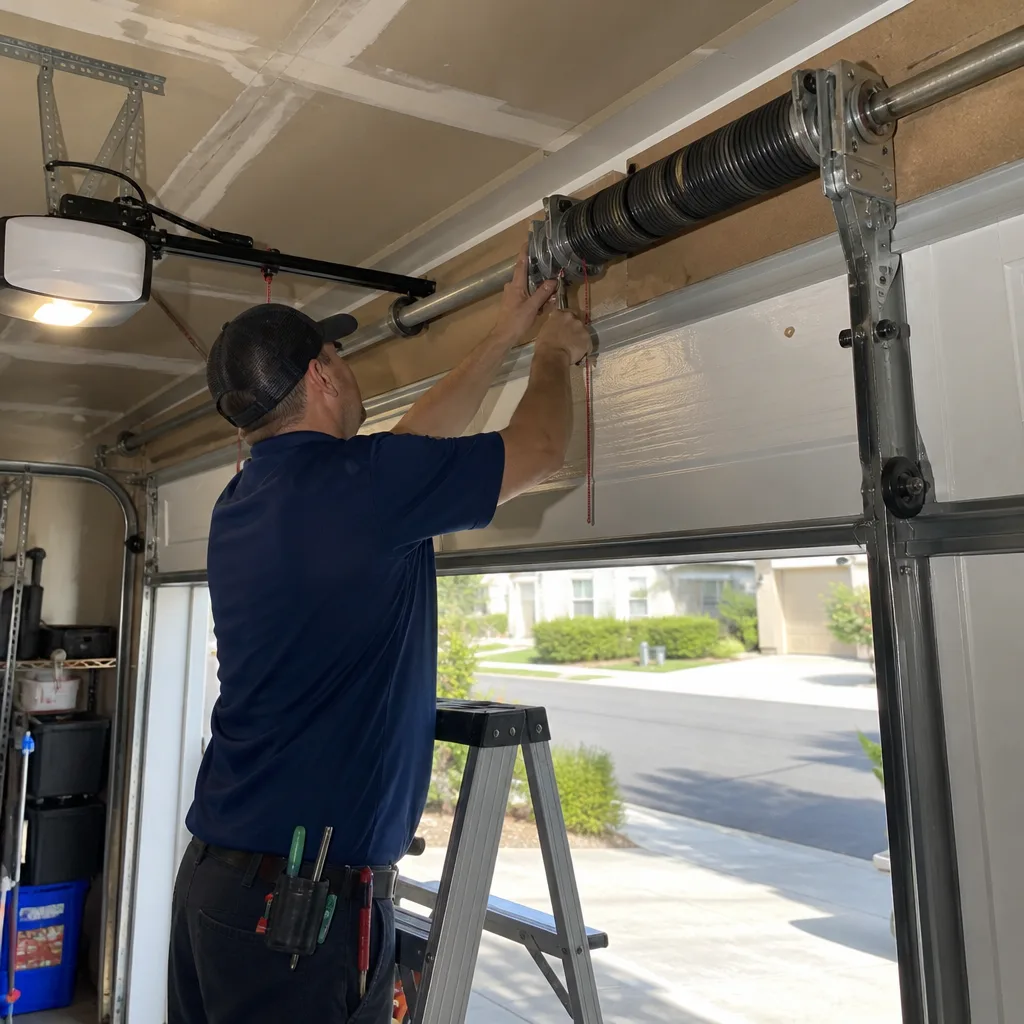 After
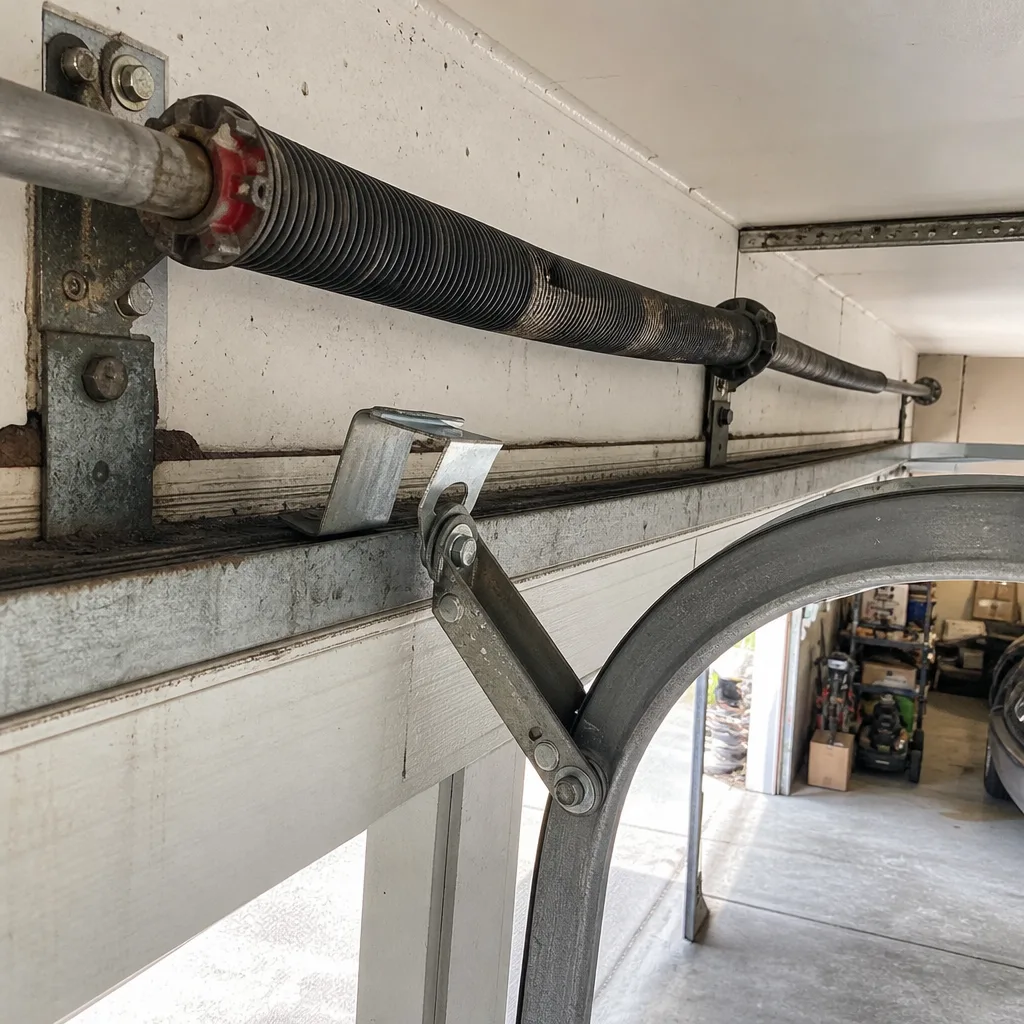 Before
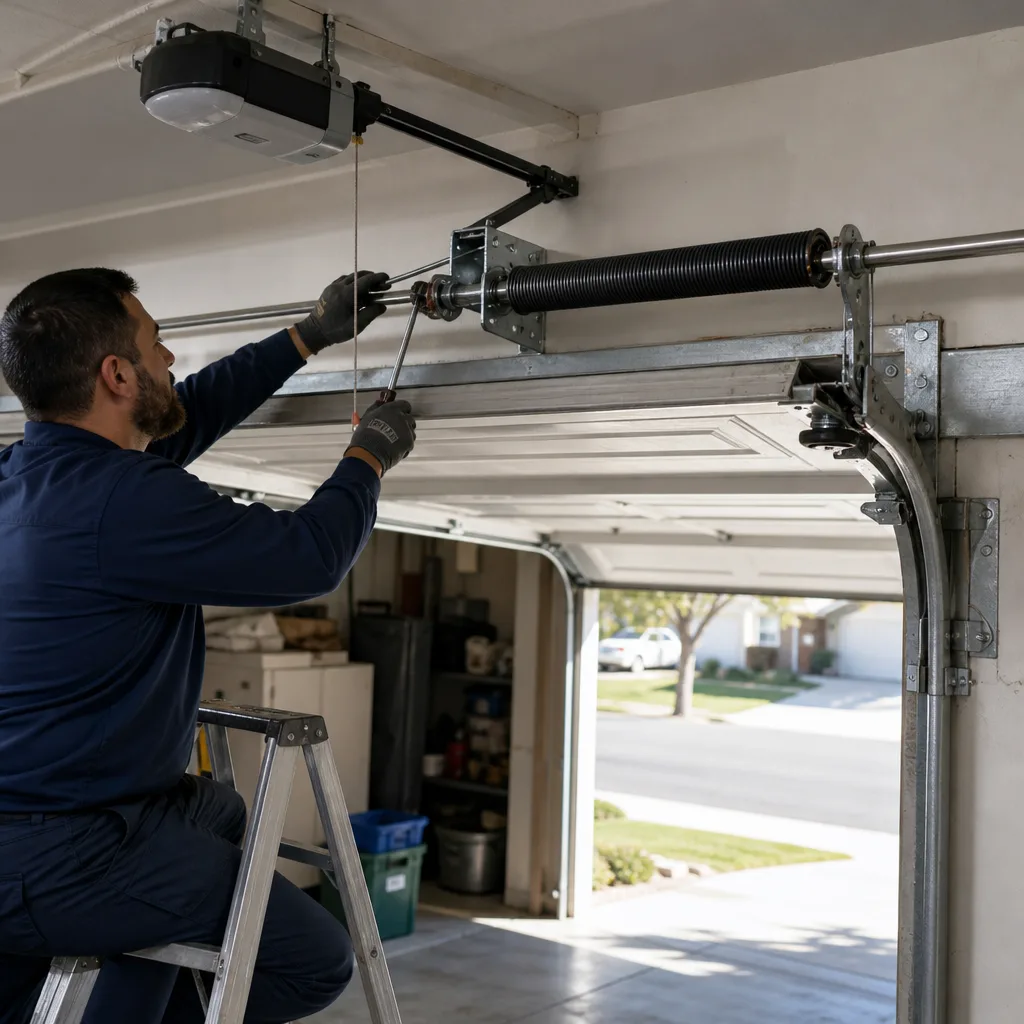 After
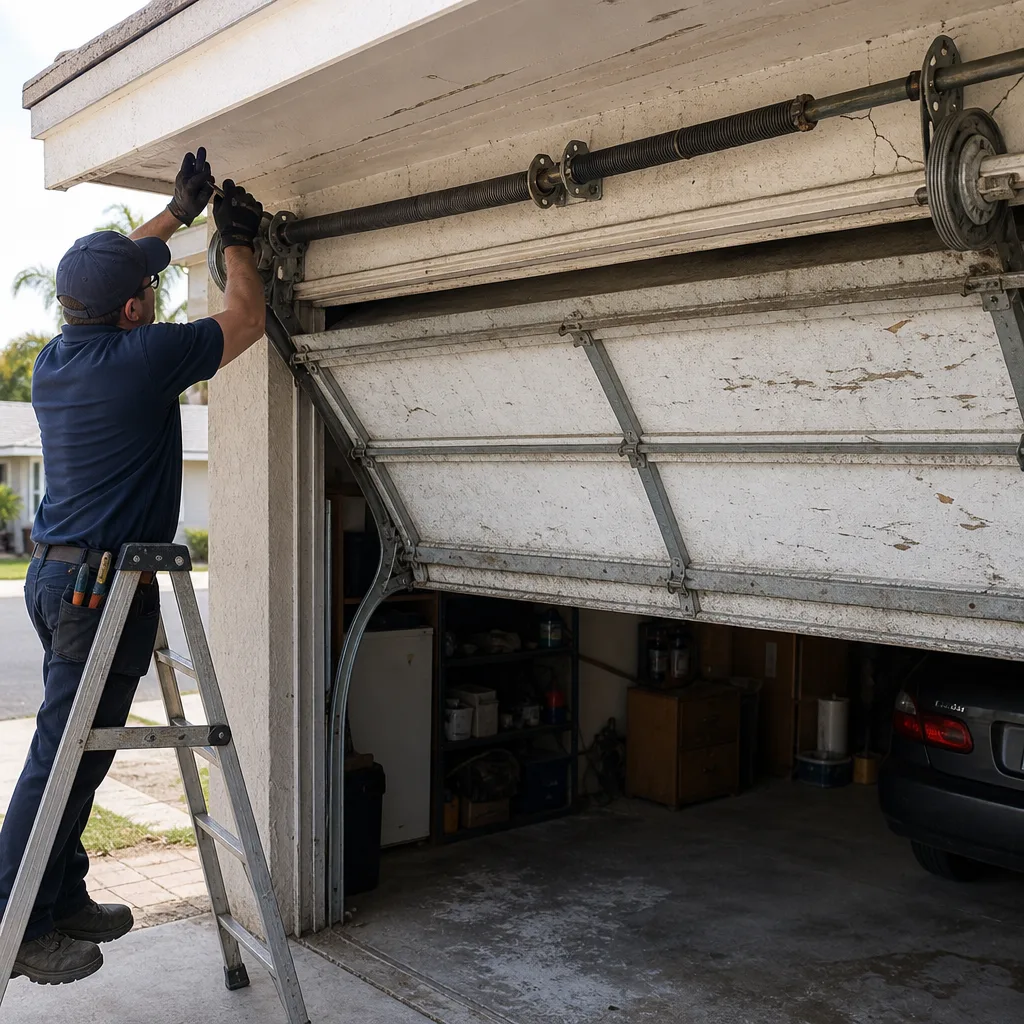 Before
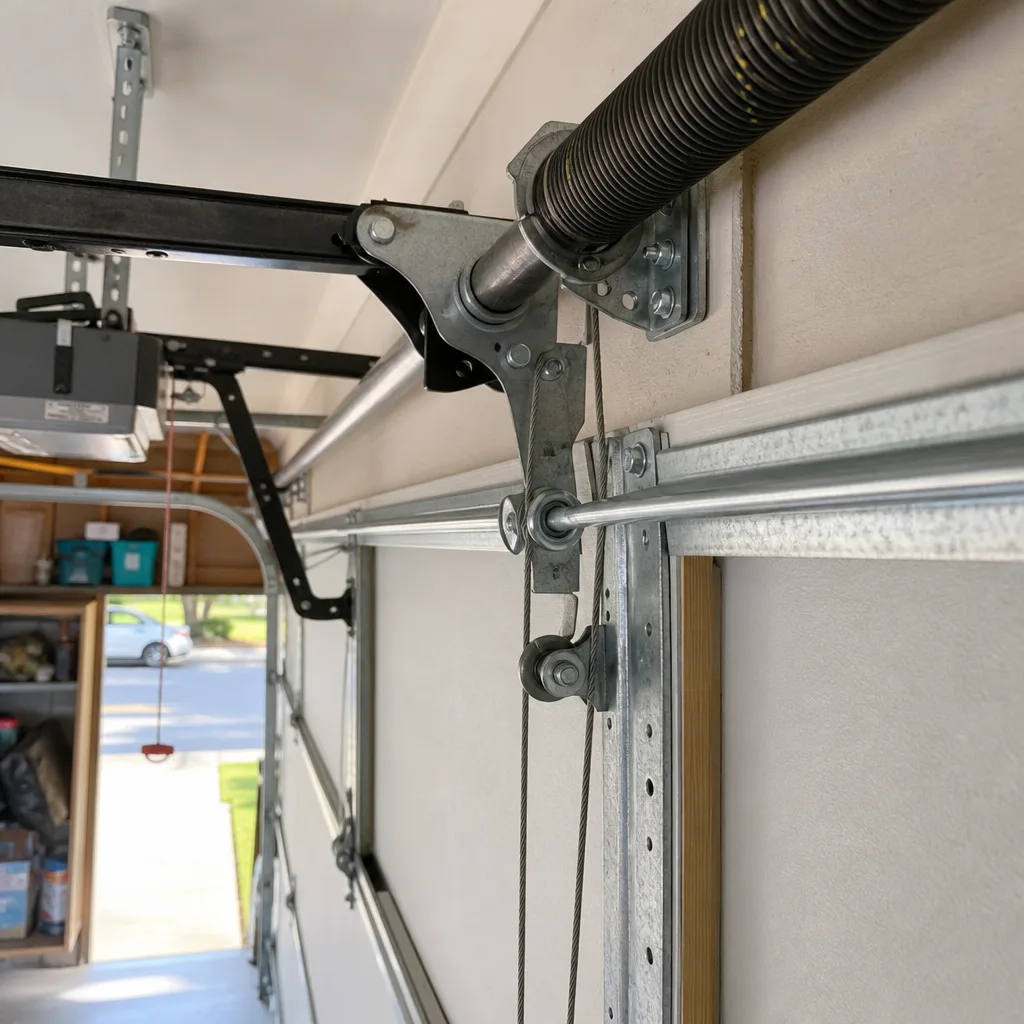 After
When to Call a Professional
Some garage door issues are safe to observe and document from a distance. Others require immediate professional attention, and the distinction matters. A door that’s off its tracks, a snapped cable, a door that closes too fast, or any suspicion of a broken torsion spring: call a professional immediately. Torsion springs under tension hold enough stored energy to cause serious injury or death if mishandled. Never attempt to adjust, remove, or replace a torsion spring yourself. A door that suddenly feels heavier than normal, closes with a bang, or won’t stay open is telling you its spring system has failed. Document the issue, keep everyone away from the door, and call. Garage Door Repair Mira Mesa offers free estimates in Mira Mesa – call (833) 620-4120. For more guides & resources, visit our blog.
Frequently Asked Questions
A torsion spring replacement in Mira Mesa typically runs $280 to $450 for a standard two-car door, depending on spring specifications, cycle rating, and whether both springs are replaced. A single spring replacement is cheaper upfront but both springs wear at roughly the same rate, so paired replacement is the standard professional recommendation. Call (833) 620-4120 for an exact quote – estimates are free.
Look for the C-61/D28 classification on their CSLB license. This is the Door, Gate & Activating Devices classification, and it’s the only classification that specifically covers residential garage door installation and repair. A General B license alone doesn’t verify garage door specialization.
That depends on our current schedule, but emergency calls for doors that won’t close – which is a security issue as much as a mechanical one – get prioritized. Call (833) 620-4120 and we’ll tell you the soonest available window. Same-day service is often available in Mira Mesa.
No. The price we quote is the price you pay, agreed in writing before any work starts. If we discover additional damage during the repair, we stop, show you, and get written approval before proceeding with any additional work. The total is always agreed before work begins, never after.
Yes. Our service vehicles are stocked with a range of torsion springs in common residential specifications, cables, rollers, hinges, and opener parts for Chamberlain, Genie, and other major brands. Most repairs in Mira Mesa are completed on the first visit.
We’re factory-familiar with Chamberlain, Genie, Clopay, and Amarr, among others. That means we know the product lines, the common failure points, and the correct replacement parts – both for openers and for the mechanical door hardware. We work on the brand you already have.
The Bottom Line
Hiring a garage door contractor in Mira Mesa comes down to verification and specificity. Verify the C-61/D28 classification and complaint history on the CSLB database. Ask the five phone-call questions that expose generalists. Require a written quote with part numbers and spring specifications you can hold someone to. Confirm a parts-and-labor warranty before work begins. A garage door specialist, not a generalist, passes every one of these checkpoints comfortably – and that’s the person you want working on a system that combines enough stored energy to cause serious harm with the electronic complexity of a modern opener. A specialist knows the math, the brand, and the specific failure patterns of Mira Mesa homes. The generalist knows where to buy a spring wrench.
Written by the team at Garage Door Repair Mira Mesa, serving Mira Mesa since 2012.