
Last updated November 3, 2026
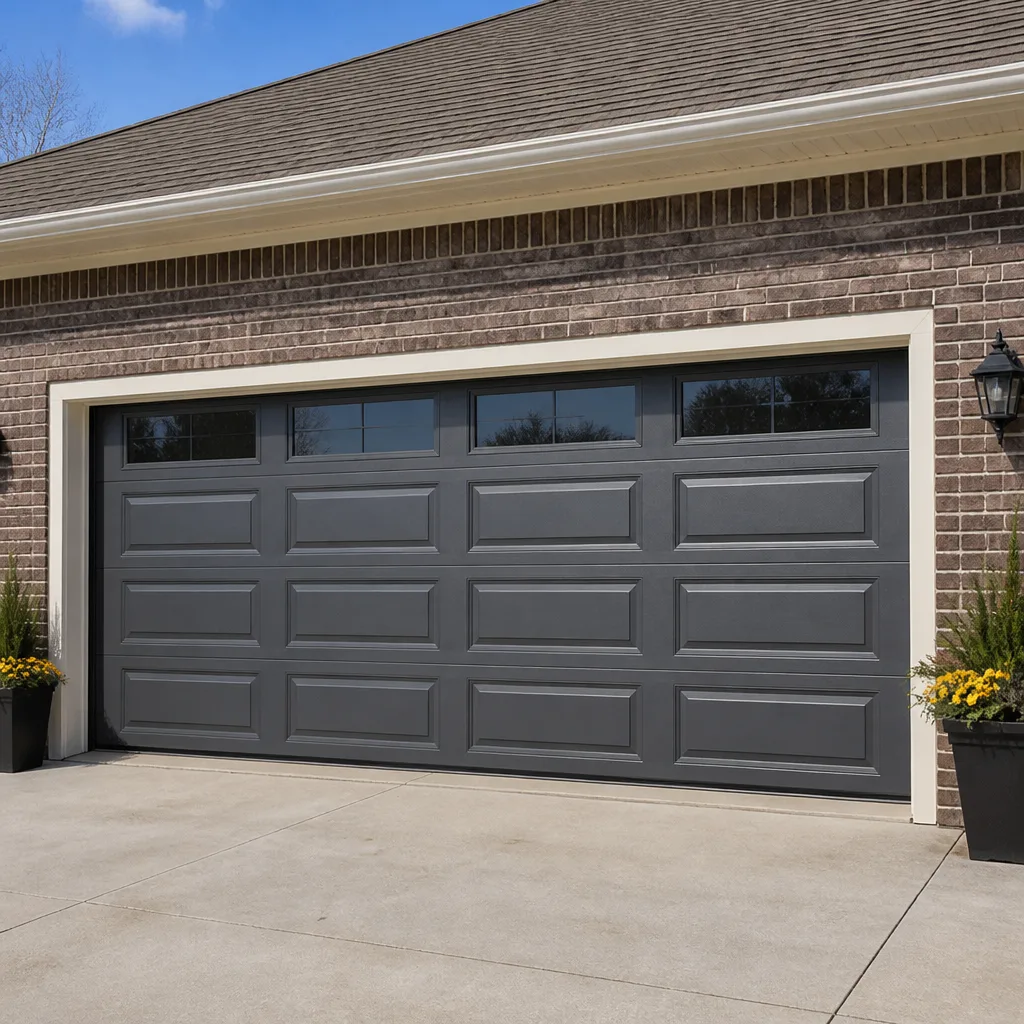 Raised-panel steel
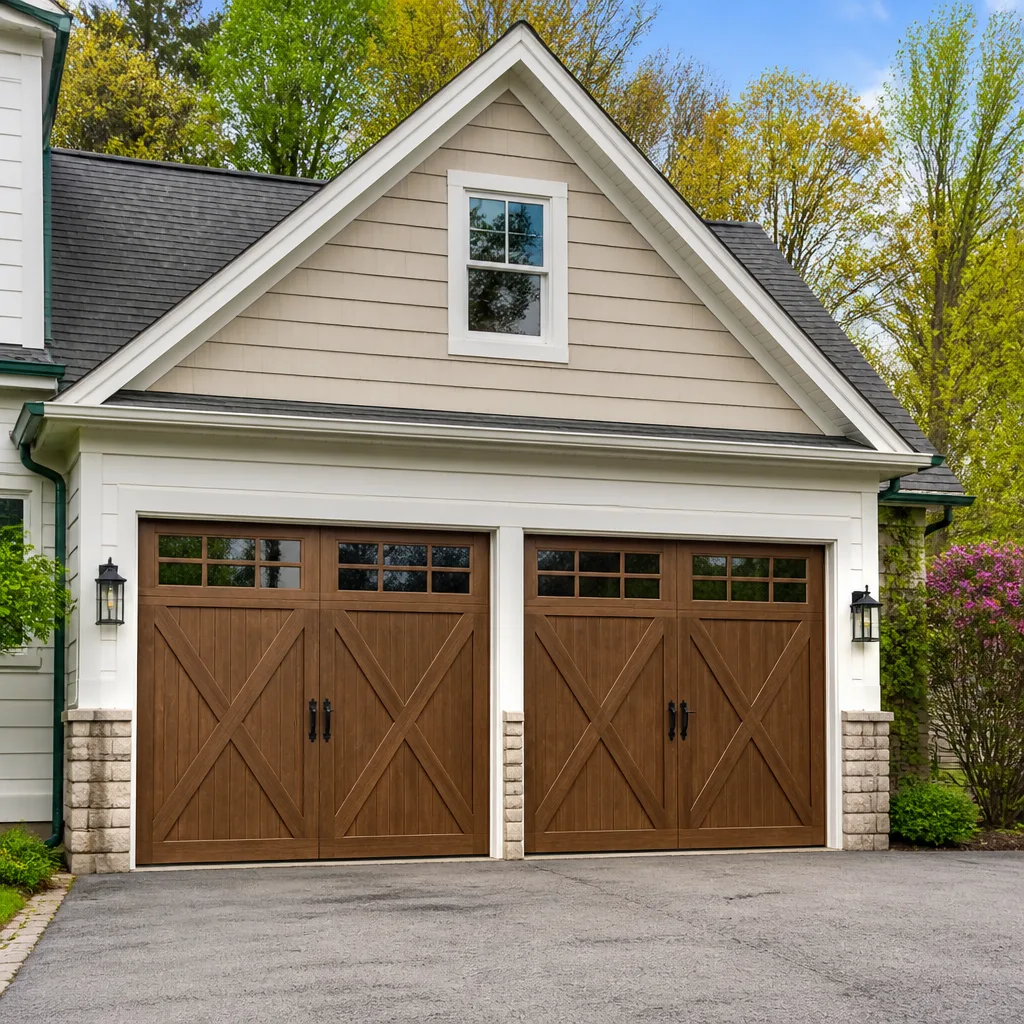 Carriage house
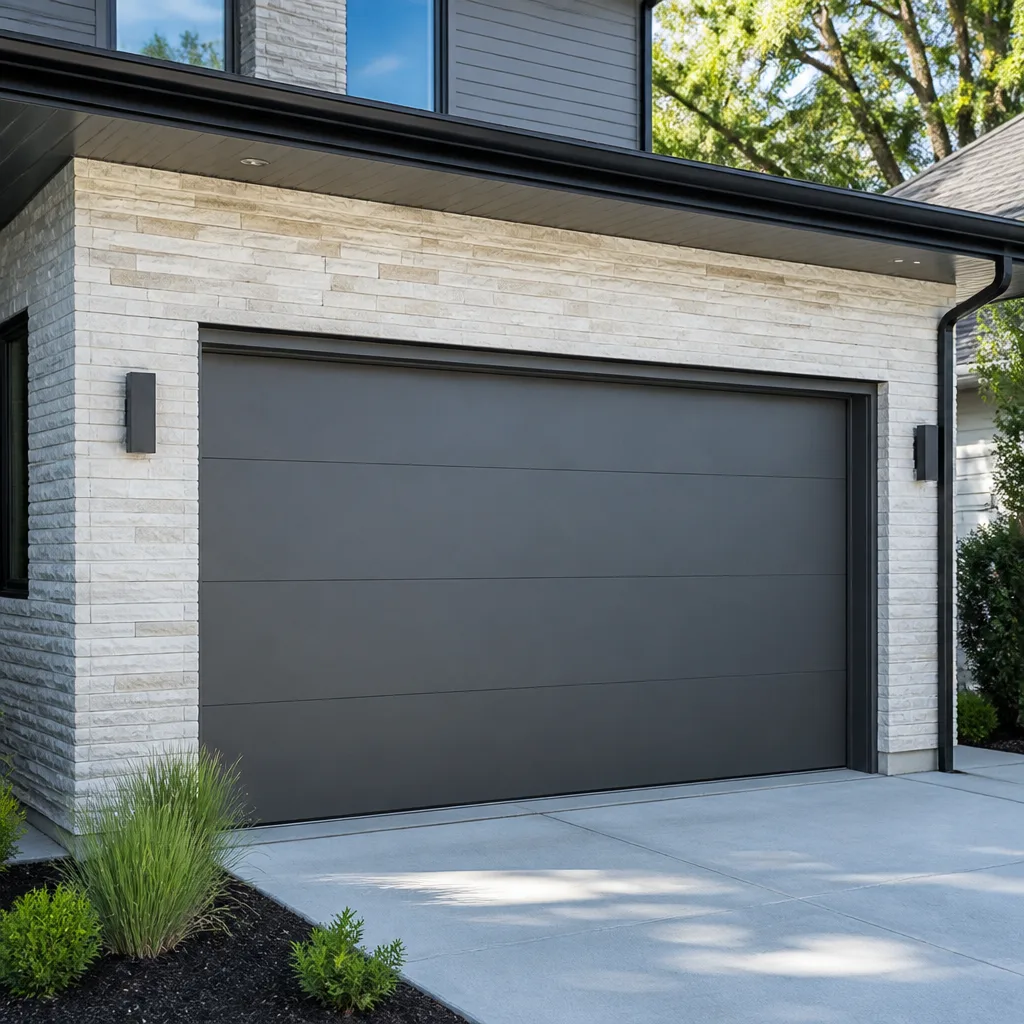 Modern flush
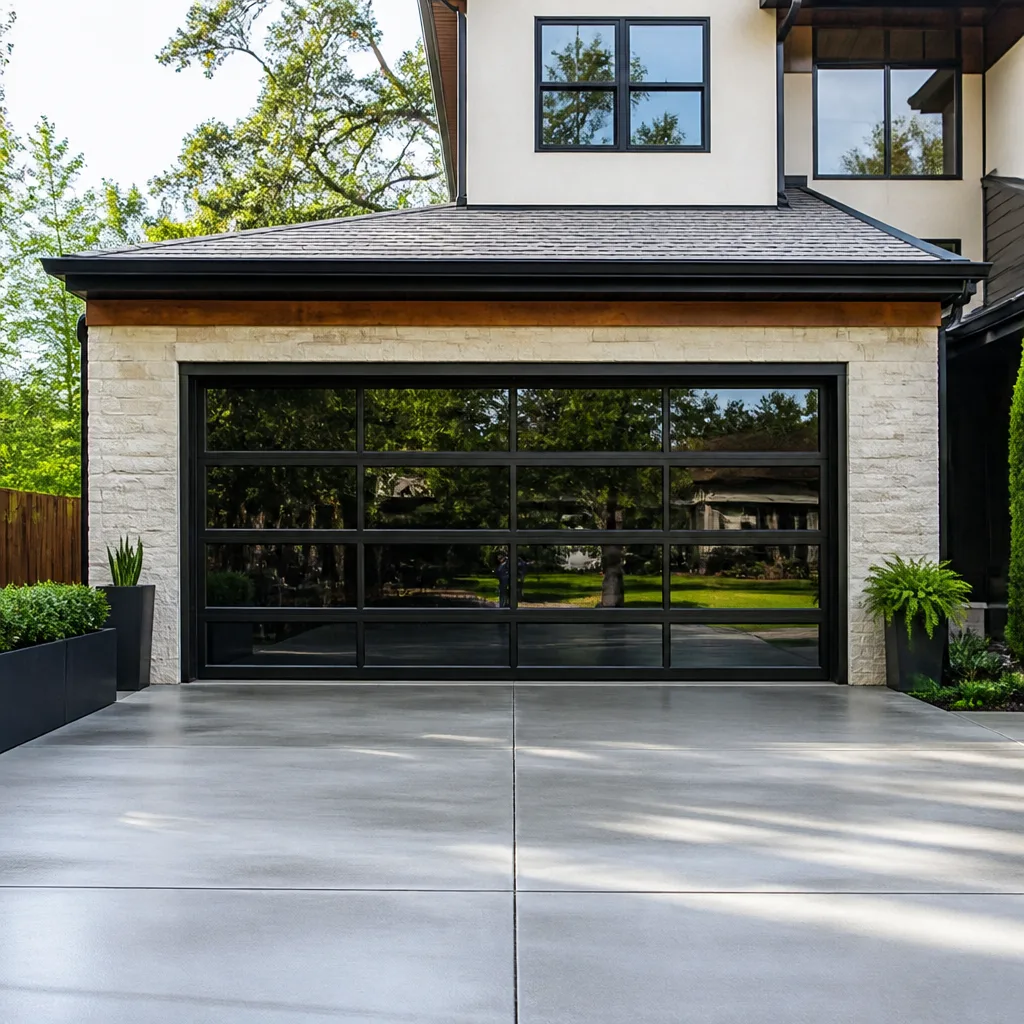 Full-view glass
 LiftMaster openers
 Chamberlain openers
Full 25-point door and opener safety check with every visit - springs, cables, rollers, tracks, and your LiftMaster or Chamberlain opener included
You get a price before we start. It does not change when the truck arrives.
Get your free estimateSeasonal Garage Door Care for Mira Mesa: Year-Round Homeowner’s Guide
Most seasonal garage door guides are written for places with snow, ice, and freezing temperatures. Mira Mesa doesn’t have those problems. What it does have is a marine layer that hangs over the 92126 zip code from May through July, dry offshore winds from August through October, and winter overnight lows that drop just enough to change how steel cables and torsion springs behave. These conditions create a maintenance calendar that’s completely different from what a generic guide would tell you. This guide covers the exact inspection and lubrication schedule that matches Mira Mesa’s actual climate pattern, the common failure points we see in each window, and the one month each year when a single service visit catches the most problems before they become emergency calls. For more, see our The Complete Garage Door Repair Guide for Mira Mesa Homeowners.
Quick Answer
Mira Mesa garage doors need four season-specific checks per year: interior condensation and bottom-seal inspections during the May-July June Gloom period, lubricant re-application and weatherstripping checks during the August-October Santa Ana window, track debris and cable tension checks from November through February, and year-round attention to salt-air corrosion on hardware if your home sits within two miles of the coast. The single most efficient service month is late September, when the worst of the marine-layer moisture has passed and you can catch summer damage plus Santa Ana prep in one visit.
Styles & brands we work with
- Raised-panel steel
- Carriage house
- Modern flush
- Full-view glass
- LiftMaster openers
- Chamberlain openers
Table of Contents
- Why Mira Mesa’s Climate Demands a Different Maintenance Calendar
- May – July: The June Gloom Condensation Protocol
- August – October: Santa Ana Dry Wind Preparation
- November – February: Track Debris and Cold-Weather Cable Checks
- Year-Round Salt Air Mitigation for Coastal Mira Mesa Homes
- The Complete Lubrication Schedule for Mira Mesa Conditions
- The Single Best Month for an Annual Service Call
- Common Mistakes to Avoid
- When to Call a Professional
- Frequently Asked Questions
Why Mira Mesa’s Climate Demands a Different Maintenance Calendar
Mira Mesa sits roughly 10 miles inland from the Pacific, which puts it in a strange middle zone. We’re close enough to the coast to get morning marine layer and measurable humidity, but far enough inland that the afternoon sun burns it off fast and heats surfaces quickly. That daily wet-to-dry cycle is the single biggest factor in how garage door components age here. It’s not the average humidity that matters. It’s the swing.
A steel garage door panel on a typical Mira Mesa morning in June will be cool to the touch and carrying a thin film of condensation on the interior face. By 2 p.m. that same panel can be 40 degrees warmer and bone dry. That expansion and contraction cycle, repeated across 70 to 90 days of June Gloom, is what loosens panel joints, causes paint micro-cracking, and creates the conditions where hinge pin shanks start to rust. Homeowners who never open their garage door except to park the car rarely see the interior face of the door, which is exactly where the damage accumulates.
In our experience working on doors throughout Mira Mesa, the homeowners who follow a season-specific inspection routine get noticeably more life out of their doors and openers than those who follow a generic “lubricate twice a year” schedule. The difference isn’t the garage door brand, whether it’s a Clopay steel door or an Amarr composite. The difference is catching the right failure point in the right month. For a broader picture of how our repair work fits into full door system service, see our Garage Door Repair in Mira Mesa page.
May – July: The June Gloom Condensation Protocol
The condensation that builds up inside an uninsulated steel door during Mira Mesa’s May-through-July marine layer season is doing more damage to panel joints and bottom seals than most homeowners realize, because it’s happening on the interior face where you never look. Here’s the mechanical chain: overnight marine layer pushes cool, damp air against the exterior of the door. The door’s steel skin stays cold into the morning. Warm interior air from the garage meets that cold surface and condenses. The water sits on the interior face, runs down to the bottom seal channel, and pools where the seal meets the slab.
That pooled moisture wicks into the bottom seal retainer, which is typically aluminum on Wayne Dalton and Genie door systems. Once moisture sits in that channel for weeks, two things happen. First, the seal itself starts to delaminate from the retainer, which breaks the airtight barrier along the slab. Second, the steel screws that hold the retainer to the bottom panel begin to rust at the thread line, eventually loosening the retainer so it rattles with every open and close cycle.
What to Check: May – July
- Interior panel faces: Run your hand along the inside of the lower two panels on a morning before the sun hits the door. If you feel moisture, the door lacks sufficient ventilation in the garage. This is the window when surface rust starts on hinge pin shanks and the lower panel interior.
- Bottom seal contact: Close the door and look for daylight under the bottom seal from outside. In June, a seal that was fine in April can develop a gap as the slab and door expand at different rates with the humidity swing.
- Hinge pin shanks: Open the door halfway and look at each hinge. Surface rust on the shank itself is an early warning that the hinge will bind within 12 to 18 months. This is where stainless and galvanized hardware prove their value.
- Header area condensation: Check the top panel interior near the header. Condensation often collects here first because warm air rises and hits the coolest metal surface.
What to Do: May – July
- Wipe down any interior condensation with a dry cloth on a morning inspection. Do this three or four times during the May-July window and you’ll cut the rust cycle substantially.
- Inspect the bottom seal retainer screws with a flashlight. If you see rust bloom around the screw heads, replace them with stainless steel screws before the threads strip.
- Run a bead of marine-grade clear silicone along the top edge of the bottom seal retainer where it meets the panel. This blocks the moisture that wicks behind the retainer.
- If the garage itself feels humid in the morning, open the pedestrian door or a side vent for 20 minutes after parking a car. The car’s warm engine block is a major moisture source inside a closed garage.
The June Gloom window is also when we see opener electrical gremlins appear. Moisture in the air can cause intermittent sensor signal loss on units where the sensor wires have worn insulation. If your opener starts behaving erratically in June but fine in dry months, the wiring harness may be absorbing moisture. Our Garage Door Opener Repair in Mira Mesa team traces these kinds of issues to moisture-exposed connections on a regular basis.
August – October: Santa Ana Dry Wind Preparation
When the Santa Ana winds arrive in Mira Mesa, usually starting late August and peaking in September and October, the relative humidity can drop below 10 percent for days at a time. What that does to a garage door is more subtle than the June Gloom moisture attack, but just as damaging over time: it strips light-viscosity lubricants from hinge pins, roller bearings, and torsion spring coils.
The problem is that most garage door lubricants sold at big-box stores in Mira Mesa are thin-body sprays designed for general use. They go on easy and penetrate quickly, but they don’t have the film strength to hold up through a multi-day Santa Ana event. By the third day of hot dry wind, the lubricant has basically evaporated off the metal surfaces where it matters most. The door starts to sound dry, then gritty, then it squeaks. That noise is metal on metal, and it’s wearing your hardware at an accelerated rate. A Clopay steel door with good hardware will tolerate this for a while, but the wear compounds season after season.
The Santa Ana Lubrication Protocol
- Use a lubricant with a heavier film body than standard spray. Look for words like “tacky,” “high-filming,” or “heavy-duty” on the can. These are often described as garage door-specific or industrial-grade.
- Apply to hinge pin shanks, roller bearing shafts, torsion spring coils, and the operator rail if you have a belt or chain drive. For chain drives, use a chain-specific lubricant rather than a spray.
- Never lubricate the plastic gears inside a Chamberlain or LiftMaster opener. Those gears are engineered to run dry. Grease and oil attract dust, and Santa Ana dust is abrasive enough to chew the gear teeth down in a single season.
- Wipe away excess lubricant after application. The lubricant film should be thin enough that you can’t see it pooling. Excess lubricant collects dust, and dust plus lubricant becomes grinding paste.
Weatherstripping Brittleness Checks
The same dry air that strips lubricant also dries out the vinyl and rubber compounds in your side and top weatherstripping. In Mira Mesa, we see weatherstripping that cracks and splits during Santa Ana season after just three or four years of service. The side strips on a Wayne Dalton door in a west-facing garage on a street with no shade tree will take a beating: hot afternoon sun on the exterior plus dry wind on the edge equals rapid compound breakdown.
To check yours, run a thumbnail down the weatherstripping with light pressure. If the surface feels chalky or leaves a white residue on your nail, the compound is oxidizing. If you see hairline cracks running parallel to the door frame, the seal has lost its elasticity and will crack through within the year. Replacing weatherstripping before the winter months keeps water out during the few rain events we do get.
November – February: Track Debris and Cold-Weather Cable Checks
Winter in Mira Mesa is mild by any national standard, but it brings two specific garage door issues that other seasons don’t. The first is debris accumulation in the vertical and horizontal tracks from the deciduous street trees that line many streets in the 92126 area. Leaves, small twigs, and seed pods fall through November and December, work their way into the track channels, and compact into a gritty paste when the door rollers pass over them. This debris doesn’t usually stop a door outright, but it creates enough resistance in the track to put extra load on the opener motor, which shortens motor life.
The second issue is cable tension. As overnight temperatures drop into the 40s, the steel lift cables on your garage door contract slightly. On a door that was installed in the heat of August, the cables may have been set with just barely enough tension to begin with. When they contract in December, the tension rises. That extra load falls directly on the torsion spring and the opener. If your door sounds heavier or the opener sounds like it’s working harder during winter months, the cable tension may have shifted.
November – February Maintenance Steps
- Inspect both vertical tracks with a flashlight. Look for leaf matter, small twigs, and the fine grit that accumulates at the bottom of the track curve. Vacuum it out with a shop vacuum rather than wiping it deeper into the channel.
- Check both lift cables where they wrap around the drum at the top of the door. Look for frayed wire strands or a cable that sits unevenly in the drum groove. If the cable wraps overlap or sit outside the groove, that’s a tension problem.
- Test the door balance by disconnecting the opener (pull the red release handle with the door closed) and lifting the door manually to the halfway point. It should hold position without drifting more than a few inches. If it drops, the spring is losing tension and the door is heavier than it should be. If it rises, the spring is over-tensioned. Either condition wears out the opener motor prematurely.
- Listen for a popping or creaking sound from the torsion spring area when the door moves through the first 12 inches of travel. In winter, the colder metal makes any existing spring wear more audible.
If the door fails the balance test or you see fraying on the cables, this is the point where a specialist visit makes financial sense. A door that’s heavy and out of balance will eventually strip the opener gear or pull a cable off the drum, and that’s a more expensive repair than a spring adjustment would have been. For full door system diagnosis including springs, cables, tracks, and panels, start at our Garage Door Repair Mira Mesa home service page.
Year-Round Salt Air Mitigation for Coastal Mira Mesa Homes
Not every home in Mira Mesa faces the same corrosion exposure. If you’re east of Camino Ruiz and Interstate 15, you’re dealing mostly with standard inland air. But if you’re in the western parts of the 92126 zip code within roughly two miles of the coast, marine air reaches your home on most mornings year-round, and it carries salt particles. Salt air attacks garage door hardware in a very specific pattern, and once you know what to look for, you’ll see it on almost every door within the coastal band.
The pattern: standard zinc-plated hinges and brackets corrode first, showing white powdery oxidation at the pin connection points. Galvanized hardware lasts longer, but the galvanic coating eventually sacrifices itself and the base steel starts to rust. Stainless steel hardware is the only finish that holds up reliably in the coastal band, and even some stainless alloys will show surface speckling after enough exposure.
The critical failure point is the hinge pin shank. That’s where the hinge leaf rotates around the pin, and it’s where the thin zinc coating wears off first through repeated motion. Once the coating is gone, the shank rusts, the hinge binds, and the door starts to squeak and jump as the panels move through the horizontal track. We’ve replaced more hinges on coastal Mira Mesa doors than on inland doors of the same age by a factor of roughly three to one.
Hardware That Survives Coastal Mira Mesa
- Stainless steel hinges and brackets: The best choice for any door within two miles of the coast. They cost more, but replacement frequency drops dramatically.
- Galvanized hardware: Acceptable, but check the coating thickness. Thin galvanizing wears through at the pivot points within 3 to 5 years in salt air.
- Standard zinc-plated hardware: The factory default on many doors including some Amarr and Wayne Dalton models. Plan on inspecting these twice per year and replacing them when the first white oxidation appears.
- Powder-coated brackets: The coating protects the face but not the pin hole, so rot starts from the inside out. Many homeowners don’t see it until the bracket splits.
For coastal homes, pair stainless hardware with a spring system that carries a rust-inhibiting coating. Most torsion springs installed on homes in this band should be oil-tempered with a factory-applied rust inhibitor, or powder-coated. Bare steel springs will rust in the coastal band within two years and snap, which is a dangerous failure best prevented by inspection. See our Garage Door Installation in Mira Mesa page for details on how hardware selection factors into a new-door quote.
The Complete Lubrication Schedule for Mira Mesa Conditions
Here’s the lubrication schedule that matches Mira Mesa’s actual climate pattern, not the generic national advice you’ll see elsewhere. The key difference: we re-apply after the environmental events that strip lubricant, not on a fixed calendar.
| Time Window | Action | Reason |
|---|---|---|
| May | First lubrication application before June Gloom peak | Protects against moisture-driven rust during high-humidity weeks |
| July | Light re-application after June Gloom breaks | Replenishes lubricant that moisture and daily wet-dry cycling has degraded |
| September | Heavy-film re-application before Santa Ana peak | Builds a durable film that survives multi-day dry wind events |
| November | Final application before winter | Protects hinges and springs through cooler, damper nights |
The September application is the most important one of the year in Mira Mesa. If you only lubricate once, do it in September with a heavy-film product. That single application will carry your door through the Santa Ana winds and into the early winter season, which is the roughest stretch for hardware wear.
Where to Lubricate, and Where Not To
- Lubricate: Hinge pin shanks, roller bearing shafts, torsion spring coils, lift cable touch points, operator rail (belt and chain drive only), lock mechanism if present.
- Do not lubricate: Opener gears (plastic internal gears run dry by design), photo-eye sensor lenses (lubricant film causes signal obstruction), track channels (rollers roll on bare metal; track should stay grease-free), the bottom seal (lubricant accelerates rubber breakdown).
The Single Best Month for an Annual Service Call
If you schedule exactly one garage door service visit per year in Mira Mesa, make it late September. This timing is also covered in our The Complete Garage Door Repair Guide for Mira Mesa Homeowners. Here’s the logic. By late September, the June Gloom season is fully over, which means any condensation-related damage from the May-July window is visible and assessable. The Santa Ana winds are typically starting or about to start, so lubricant can be applied with the heavy-film product at the exact moment it’s needed. The temperatures are warm enough that metal components are in their expanded state, which is the correct condition for checking cable tension and spring balance. And the door hasn’t yet been through the winter debris cycle, so any existing track contamination is minimal and cleanable.
A professional service call in late September in Mira Mesa should cover: full hardware inspection including hinge wear, roller bearing condition, and spring surface rust; track cleaning and alignment check; cable tension and drum wear inspection; bottom seal and weatherstripping condition; opener motor, gear, and belt or chain condition; balance test and force setting verification; full lubrication with climate-appropriate products. That’s the highest-value maintenance window in this climate.
For a door that’s been maintained on this schedule, the typical lifespan of a quality steel door from Clopay or Amarr in Mira Mesa stretches substantially compared to a door that’s ignored. The hardware and spring system generally outlast the panels, which means your repaint or replacement decision gets pushed further out. When replacement does become the right call, you want a team that knows how your existing door was installed. Our Garage Door Installation in Mira Mesa page covers what that process looks like from measure to final balance.
Common Mistakes to Avoid
- Skipping the interior condensation check during June Gloom. Most homeowners never look at the interior face of their door panels, but that’s where moisture damage starts. The rust you eventually see on an exterior hinge almost always began as interior-face condensation that was never addressed.
- Using a light-viscosity spray lubricant in September. Standard silicone or light-duty sprays evaporate during Santa Ana events. If you’re applying a light spray and it sounds dry again within two weeks, you’ve found the problem.
- Lubricating the track channels. The rollers are designed to roll on clean, dry metal. Greasing or oiling the tracks attracts dust that becomes grinding paste, and the track will actually wear faster than if you’d left it alone.
- Ignoring a door that’s gotten louder in winter. A squeak or groan that appears in November and December is usually a temperature-driven cable tension change or a hinge that’s rusting from the pin outward. These issues don’t self-correct in spring; they get worse.
- Replacing a spring with a generic part rather than a brand-matched one. A Wayne Dalton door spring is wound to a specific torque for the door weight. A generic spring from a big-box store may fit, but it won’t be calibrated to your door, and the imbalance will show up as opener motor wear within a year.
- Waiting until the door fails to address the opener. Openers typically give you 3 to 6 months of warning before total failure: slow operation, partial open-and-reverse cycles, grinding noises on a chain drive. Those warning signs are cheaper to address than a full opener replacement.
- Treating coastal homes the same as inland homes for hardware. A homeowner in the coastal band of Mira Mesa who installs standard zinc hardware is setting themselves up for hinge replacements every 3 to 4 years. Pay for stainless or galvanized up front.
When to Call a Professional
Some garage door maintenance is genuinely DIY territory: wiping down condensation, vacuuming track debris, visual inspection of seals and hardware. Other tasks carry real safety risk and belong with a specialist. Torsion springs under tension can cause serious injury if handled incorrectly. Lift cables are under constant load and can whip when released. A door that fails the manual balance test has a spring system problem, not a hinge problem, and spring work is not a weekend project. If you see frayed cables, a door that slams or creeps, an opener that reverses halfway, or any hinge bracket that’s separated from the panel, stop using the door and call a professional. Garage Door Repair Mira Mesa offers free estimates in Mira Mesa. Call (833) 620-4120 and we’ll walk through what you’re seeing and schedule a visit.
Frequently Asked Questions
Once per year is the minimum for Mira Mesa conditions, with late September being the optimal month. If your home is within two miles of the coast, or if you park two cars in the garage daily, consider a second inspection in March to catch spring moisture shift damage early.
A heavy-film, garage-door-specific lubricant is the right choice. Look for a product marketed as “tacky” or “heavy-duty.” Avoid light-viscosity sprays and WD-40, which is a solvent, not a lubricant, and will strip the existing film from your hardware.
The drop in overnight temperature causes the steel cables and spring to contract slightly, increasing tension and load on the hinges. That increased load, combined with lubricant that’s thinned from summer heat, produces the squeak. A heavy-film lubricant application in November usually resolves it.
Not necessarily. Surface rust on hinge shanks and pin areas can often be addressed by replacing the hinges themselves with stainless or galvanized hardware. The door panels may have many years of life left. A 20-minute inspection will tell you whether you’re looking at a hardware swap or a panel replacement.
A professional tune-up in the Mira Mesa area typically runs in the $85 to $150 range depending on the door type and what’s included. The price is quoted and agreed before any work starts. If you have a Clopay, Amarr, or Wayne Dalton door, request a quote that includes brand-matched hardware. Call (833) 620-4120 for an exact estimate.
No. Torsion springs are under enough tension to cause severe injury if the winding bar slips. Even professionals treat spring replacement as a controlled procedure with specific tools. If your door fails a manual balance test or you see a visibly broken spring, leave the door closed and call a specialist. The door is likely too heavy for the opener to lift safely.
The Bottom Line
Mira Mesa’s garage doors face a specific set of seasonal threats that generic maintenance guides miss: interior condensation during the June Gloom months, lubricant stripping during Santa Ana dry wind events, track debris and cable contraction in winter, and year-round salt air corrosion for coastal homes. The homeowner who pairs a late-September professional service call with simple seasonal checks, dry-wiping interior panels in May and June, re-lubricating in September, vacuuming tracks in November, will get measurably longer life from their door and opener, and will avoid the expensive emergency calls that come from ignored hardware. Your Clopay, Amarr, Wayne Dalton, or Genie door is a mechanical system, not a static fixture. For more guides & resources, visit our blog. Treat it with a schedule that matches Mira Mesa’s actual climate, and it will repay you in years of quiet, reliable operation.
Written by the team at Garage Door Repair Mira Mesa, serving Mira Mesa since 2012.
See the difference
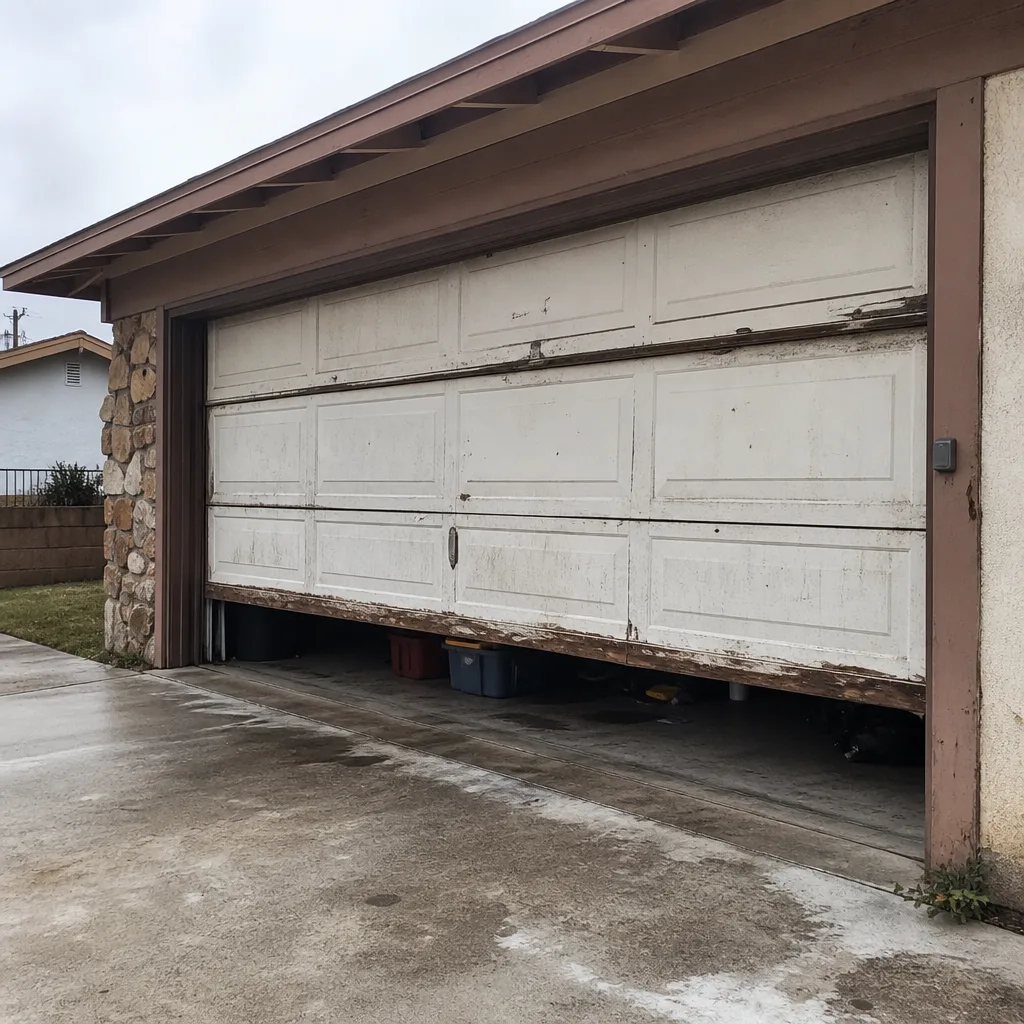 Before
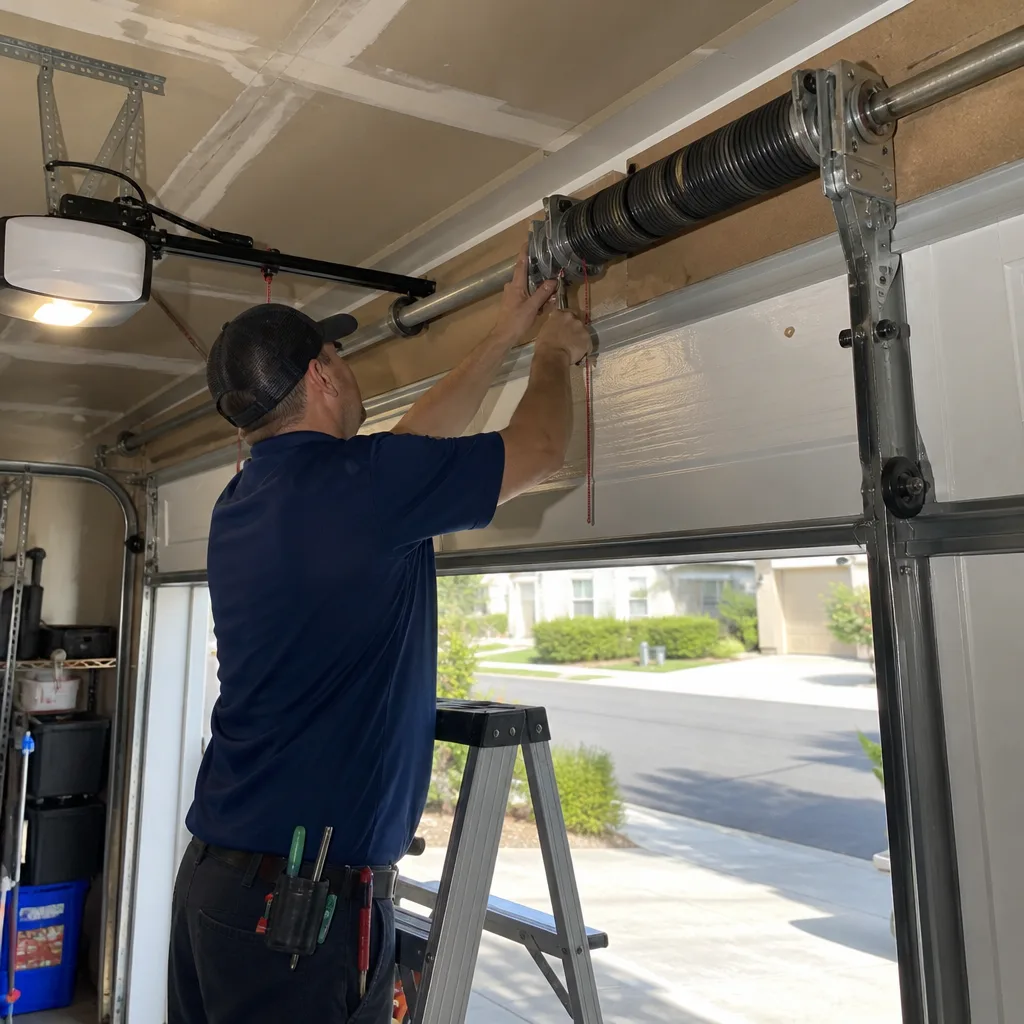 After
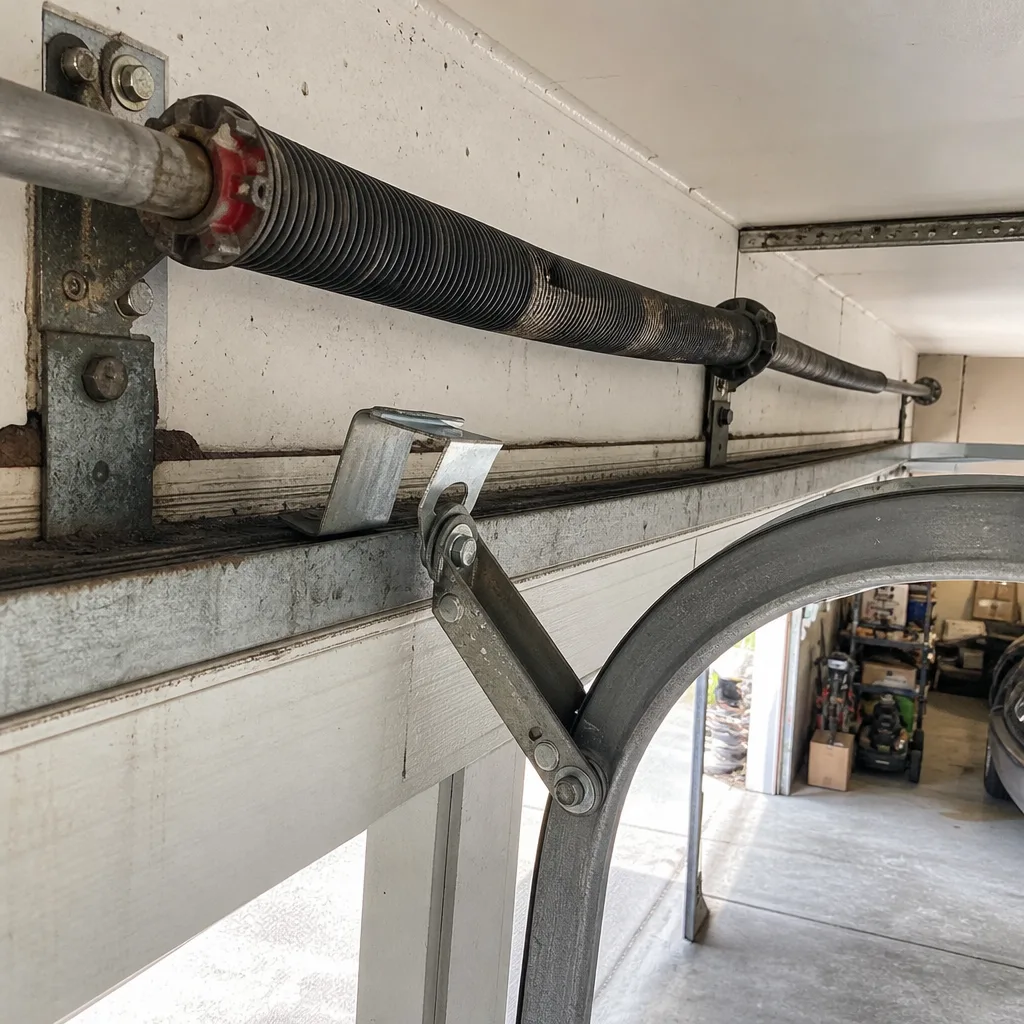 Before
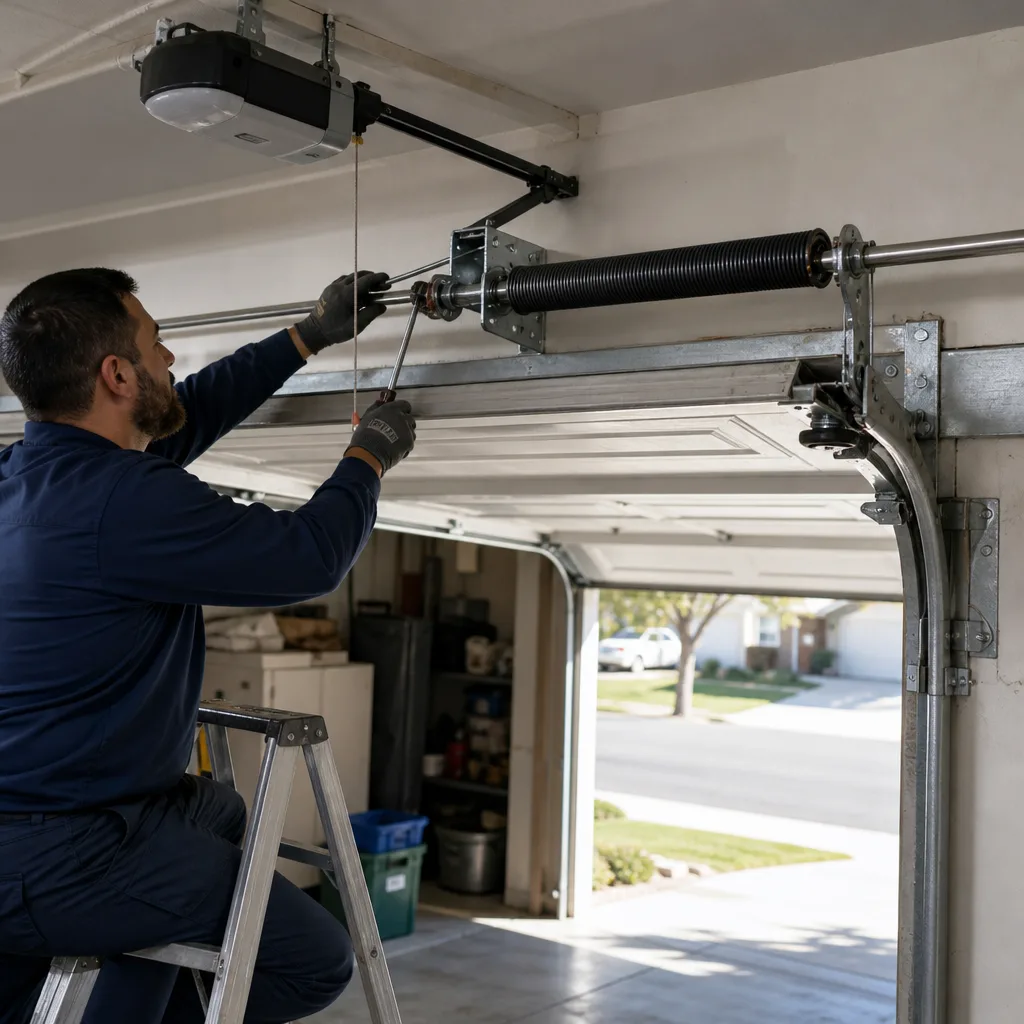 After
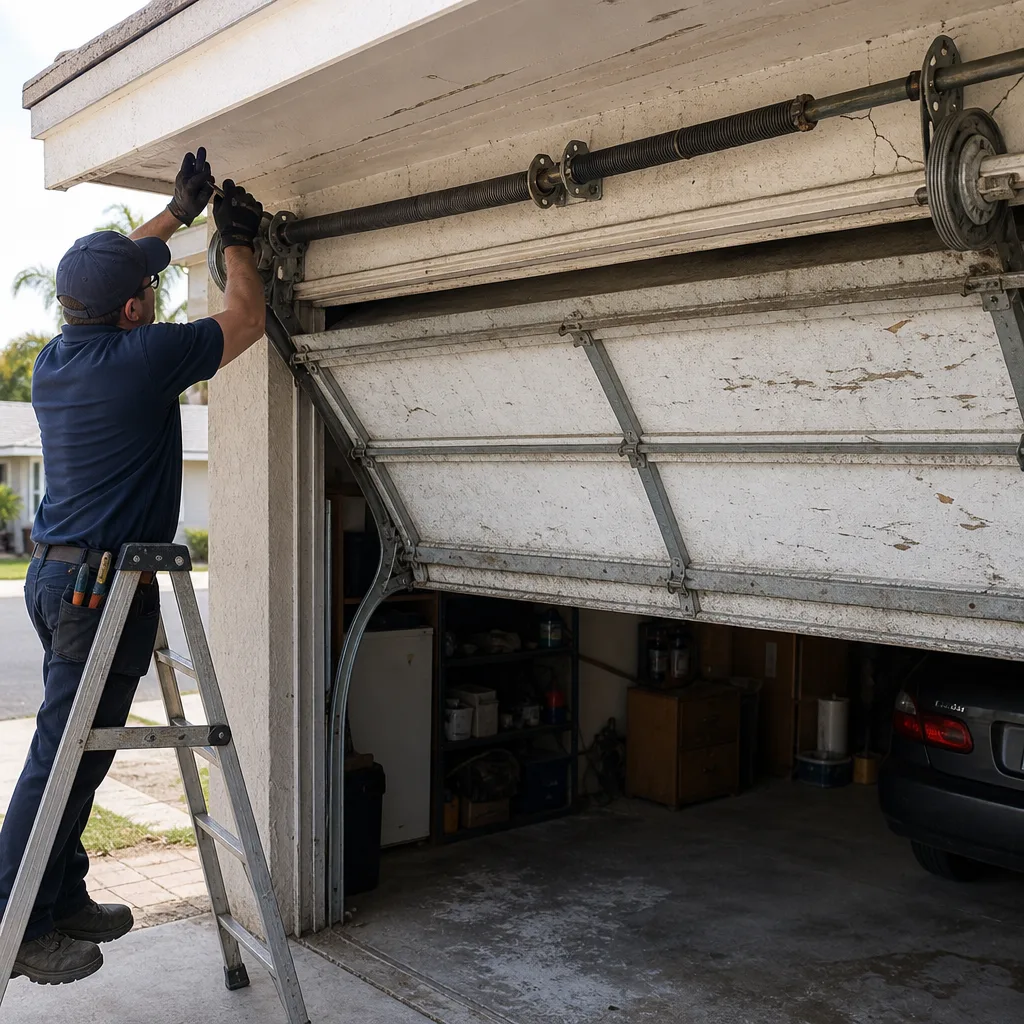 Before
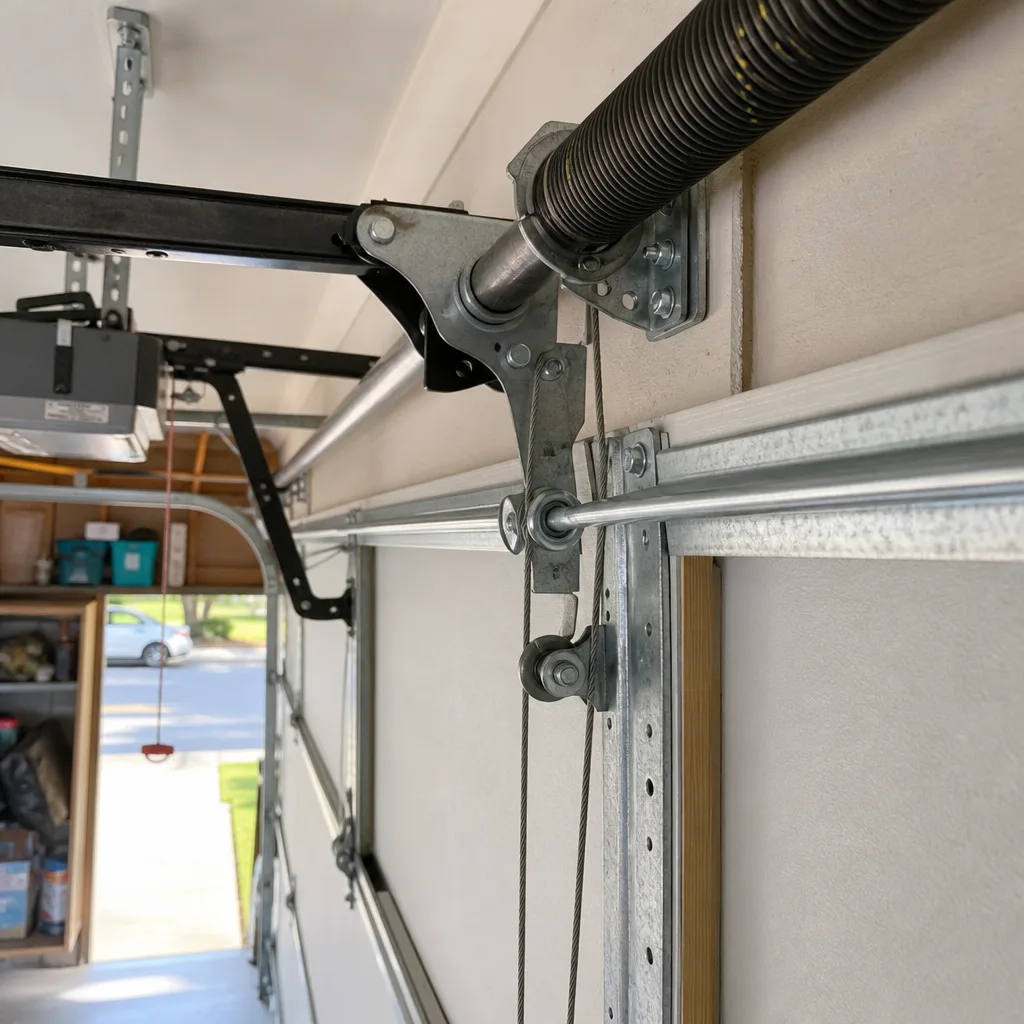 After